Before you leave, give each pot a check plan. Then decide who can follow it while you are away.
“Check the plant on Tuesday” is a useful reminder. “Water every plant on Tuesday” may give one pot water it needs and another water it does not.
Your sitter needs to know which pot to find, what to check, when to add water, and where the extra water should go. A short note beside the right plant can do more than a long list of plant names.
You can build that note from the care you already give. Use the observation sheet and per-pot card below, then walk through the plan together.
Start with the pots, not the length of your trip
Make a list of the plants that will stay home. Give each pot a simple ID, such as A, B, or “desk pot.” Add a photo if two look alike. Write its usual place so your sitter can find it again.
The same kind of plant can need different care in two different pots. Plant size, potting mix, container, light, and room conditions all affect watering. Iowa State Extension recommends regular checks rather than automatic watering on a calendar.
So skip a chart that promises how many days a whole plant type can go without water. A trip length tells you how long to arrange help. It does not tell you when each pot will need a drink.
For each pot, note:
- Its name or ID and a clear location.
- The care source you use for its water needs.
- How you decide it needs water now.
- The last time you actually watered it.
- Whether it has an inner pot with drainage holes, an outer cover pot, or a reservoir system.
- Any care question you need to settle before leaving.
An outer cover pot is the decorative pot around an inner plant pot. A reservoir is a water store built into a growing system. Mark the difference; your sitter should not have to guess which one holds water on purpose.
Watch one normal care cycle if you have time
Start your notes ahead of packing day. Check each pot as you normally would. Record what you found and whether you watered. Include days when you checked and did nothing.
Those “no water” entries matter. They show that a visit does not have to end with a watering can.
Use your plant's established care guidance to choose its moisture cue. Show exactly where and how you check the potting mix. Do not give the whole collection one rule such as “wait until all the soil is dry.” Some plants need a different moisture level from others. Illinois Extension describes these different moisture needs and advises looking up the individual plant.
If you use pot weight as a second cue, let the sitter feel that same pot at the stages you recognize. “Light” means little to someone who has never lifted it. Only lift pots that can be handled safely.
Do not wait for a plant to wilt just to create a teaching moment. And do not water a wet pot just to show how watering works. You can explain the steps without adding water, then show a real watering when that pot needs it.
BEFORE-TRIP OBSERVATION SHEET

Pot ID / name: ______________ Usual place: ___________________
Care source for this plant's water needs: ____________________
Moisture cue I use, and where I check: ________________________
Second cue, if useful: _______________________________________
Pot type / cover pot / existing reservoir: ____________________

Date/time | What I checked and found | Watered? What I did
_________ | ________________________ | _______________________
_________ | ________________________ | _______________________
_________ | ________________________ | _______________________

Last actual watering: ________________________________________
Room or care changes coming during the trip: _________________
Questions to settle before handing this pot over: ____________
This sheet is a record, not a countdown. One observed cycle does not prove the pot will dry at the same speed during your trip.
Leaving soon, with no useful notes?
Use what you know, but mark what you do not. Ask someone comfortable with plant care to check the uncertain pots and help set the visit plan. Do not turn a guess into a firm watering instruction just to fill every blank.
For a new plant or a new growing system, you may need more help than a note can give. Arrange that before you leave, including who can respond if the first sitter is unsure.
Choose check visits from what you learned
Go down your list and sort by the job that needs doing:
| What you found | Plan to arrange |
|---|---|
| You expect a pot may reach its watering cue while you are away. | A person who can check it before that point and water if needed. |
| You are unsure how the pot or room will behave. | Help from someone who can assess it and adjust the check plan. |
| The pot has a familiar reservoir system. | Its own instructions for checking, filling, and spotting a problem. |
| You think no watering will be needed. | A recorded reason, plus a way to get help if conditions change. |
Agree on actual check dates with the sitter. Base them on your observations, the plants' needs, and the conditions you expect. Leave room for a sooner visit if your notes show that might be needed. Do not make the visit date an order to water.
UF/IFAS lists a plant sitter as an option and puts plants' water needs at the center of vacation planning. That help can also be useful when a plant needs attention you cannot settle with an automatic reminder.
If your sitter cannot make the needed visits, change the help plan. Do not label the gap “fine” because the trip is only a few days. Arrange another capable helper or a suitable place for care, with that person's agreement.
Show the whole job, including drainage
Walk through one pot with your sitter. Let them find its ID and explain the note back to you. If “slightly dry” means different things to each of you, fix the note while you are both there.
Show the check first. Then show what happens if the cue is met. Use the plant's usual water and watering method, including any special needs you already follow. Put those supplies where the sitter can find them.
For an ordinary potting-mix plant in a pot with drainage holes, show how you water the mix, let excess water drain, and empty the saucer or outer cover pot. The RHS growing guide describes thorough watering followed by draining and emptying water-filled saucers.
If you remove an inner pot to water it, show where it goes and how you return it after draining. If the pot is too heavy to move, demonstrate a safe way to collect and remove the drainage water in place.
A built-in reservoir is a different setup. Do not tell the sitter to empty it under the general saucer rule. Give it separate directions for that exact growing system. Plants grown in water or other special setups also need their own plan.
Finish by showing how to log a check with no water added. That is part of caring for the pot, not a skipped job.
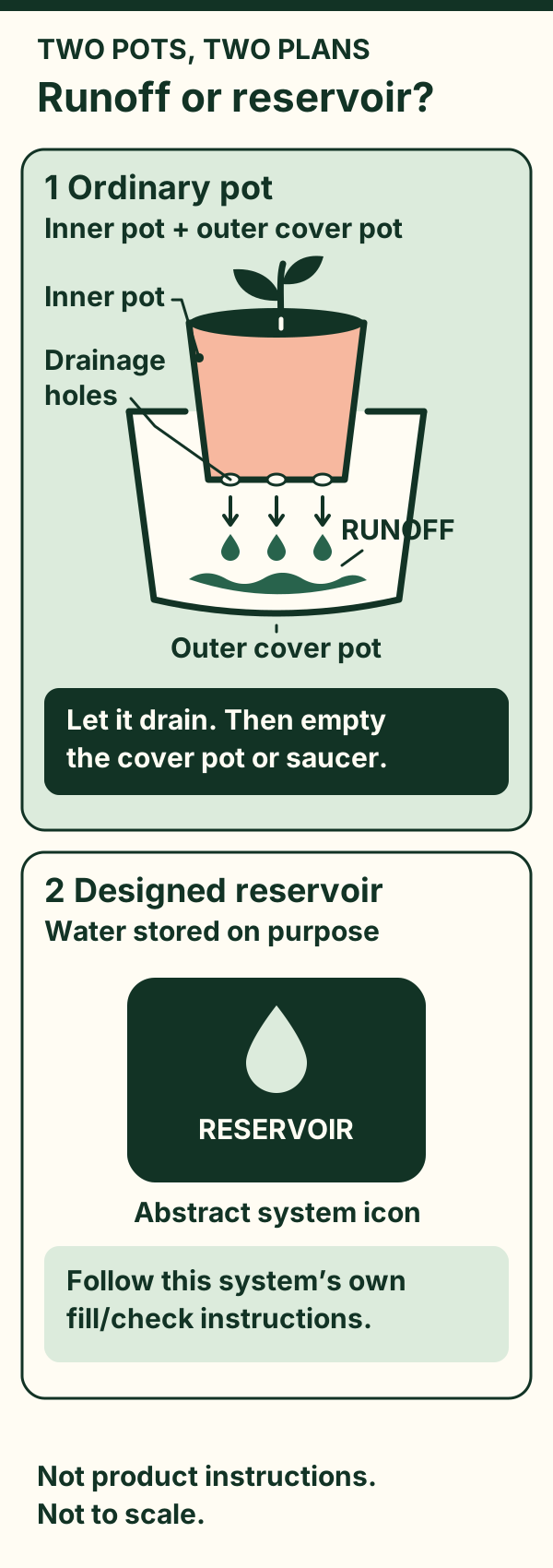
Read diagram as text
- Ordinary pot: water can leave the inner pot through drainage holes and collect in a cover pot or saucer. Let the inner pot drain, then empty that runoff. The inner pot is shown above the runoff, not sitting in water.
- Designed reservoir: this system stores water on purpose. The box and water-drop icon stand for storage; they do not show how a device is built. Follow that system's own fill and check instructions and the plant's established care plan.
- Neither drawing gives a water amount, refill schedule or promise of unattended care. If you are unsure which setup you have, check its instructions or ask for help.
Keep familiar equipment familiar
You do not need a shopping list to make this plan. Paper, your current watering supplies, and a helper who understands the pots may be enough.
If you already use a reservoir system successfully, leave its instructions beside that pot. Show the level indicator or other cue, the correct fill point, and what to do if it is not working as expected. Arrange a person to check it when needed; the presence of a water store does not prove how long it will last.
A new wick, mat, or self-watering pot needs its own suitability check and time to learn while you are home. Follow the exact directions for the system you plan to use. Leave time to see whether it supplies that pot as intended and whether excess water can cause a problem. Do not use your trip as its first trial or assume it will cover a set number of days.
The RHS also notes possible failures, such as an empty reservoir or a wick slipping out of place. A sitter should know what a problem looks like and who can help. A new device is not a substitute for the missing answers on your card.
Check the room your sitter will find
Will the curtains stay in the same position? Will heating or air conditioning change while you are gone? Is the pot near a hot-air vent or a cold pane of glass?
Illinois Extension advises avoiding temperature extremes, hot and cold air blasts, and contact with cold window glass. Check what your own plants can tolerate before changing the room's normal settings.
If you plan to move a pot, do it early enough to watch it in the new spot. Keep suitable light and temperature in mind. Write the new location on the card, and make sure the sitter can reach the pot and its drainage tray.
Your observation sheet describes the old conditions unless you update it. Leave a note about any change the sitter should watch, rather than expecting the old pattern to hold.
If a visit was missed or a log entry is missing, ask the last helper what was done. Check the pot using its card. A missing entry is not an order for make-up watering. If you still cannot tell what it needs, use the help plan.
Print one card for each pot
Fill this in before the walkthrough. Keep it beside the pot, or put the cards together with matching photos and IDs. Share your contact and backup details privately with the sitter; the blank spaces below are for your own handoff.
If the cue or instructions are unclear, settle them before you leave. A photo of the leaves alone is not a watering test. Wilting can have more than one cause, including too much water. Illinois Extension explains why a wilted plant does not always need more water.
THIS IS A CHECK PLAN — WATER ONLY IF THE WRITTEN CUE IS MET

Pot ID / plant name: _________________________________________
Photo reference / exact location: ____________________________
Owner away: _________________ Return: _______________________

PLANNED CHECK visits — these are not orders to water
_____________________________________________________________
Missed visit or missing log? Check the pot; ask the last
helper what was done. If unsure, use the help plan below.

POT OR SYSTEM — select and write the matching directions
[ ] Pot with drainage holes / saucer or outer cover pot
[ ] Existing reservoir or other special system: _______________

HOW TO CHECK THIS POT (as shown during the walkthrough)
Where / how to check: ________________________________________
Add water ONLY when this cue is met: _________________________
Second cue, if useful: _______________________________________
If cue is not met: no water; record the check below.
If the cue is blank or unclear: use the help plan below.

IF WATER IS NEEDED — follow this pot's demonstrated method
Water / supplies to use: _____________________________________
Method and stopping point: ___________________________________
Ordinary pot ONLY — drainage / emptying saucer or cover pot:
_____________________________________________________________
For a designed reservoir: its own fill/check instructions: ____
_____________________________________________________________
Usual place to return the pot / tray: ________________________
Last ACTUAL watering / system refill by owner: _______________
Last check and what was found: _______________________________

IF UNSURE OR SOMETHING LOOKS WRONG
Send photo of pot ID, whole plant, mix and problem; describe
what you checked and whether you added water.
Contact / private contact route: _____________________________
Backup if unreachable: _______________________________________
Agreed next step if neither answers: _________________________
Problems needing help sooner: ________________________________

VISIT LOG — write date/time and your name or initials
When / who: _________________________________________________
What I checked and found: ____________________________________
[ ] Checked; NO water needed
[ ] Cue met; watered / refilled as instructed
[ ] Unsure / problem; asked for help
What I did, including drainage or advice received: ____________
_____________________________________________________________
Next CHECK / follow-up agreed: _______________________________

RETURN-HOME NOTE
Last check / actual watering found in log: ___________________
Owner's current check / next action: _________________________

This card records care instructions. It does not predict how
long a plant can go without water or guarantee its condition.
Copy the visit-log part for each visit, or use the back of the card. Make sure there is room for every planned check, not just every watering.
What two action notes might look like
These are made-up action-note snippets, not a tested watering plan. Add the date, time, and your name to make each a complete log entry:
- Pot A: “Checked the mix at the spot shown. Cue not met. No water added. Returned pot to its shelf.”
- Pot B: “Cue met. Used the method on its card. Let it drain and emptied the cover pot. Watering recorded.”
A third pot might get “Unsure; photo sent; backup helper checking today.” That is more useful than an unexplained tick beside “plants done.”
Agree on a backup plan that can get the pot assessed if you cannot reply. Do not leave your sitter with “message me” as the only instruction when you know you may be out of reach.
Before you close the door
Check the pots against their own cues. Water those that need it, then log what you actually did. A last-minute watering of every pot would make the notes less useful.
Put the right supplies and empty log sheets in one easy-to-find place. Confirm the first visit and backup arrangement. If two people may help, ask both to read the latest entry before doing anything and record their own check afterward.
Read the log when you get home
Find the last check and the last actual watering; they may be different dates. Then check the pot as it is now before deciding what it needs. Do not give every plant “catch-up” water because you have been away.
Record any changes you notice, plus what you do next. If a pot looks unwell, use its moisture check and care history to seek suitable advice rather than guessing from one leaf symptom.
Keep the cards for your next trip. Change the cue, visit plan, or demonstration where the handoff was unclear. The most useful note is one the next person can follow while standing beside that exact pot.