A bare patch under a tree and a dry bank by the driveway need different plants. Start with the spot before you choose a ground cover. Check its sun, soil and water, then look for plants that suit your area.
Ground covers are low plants used to cover the soil. They can soften a bed, shade out some weeds and help hold soil in place. They still need care while they grow. A plant that fills a bed fast may also spread into places where you don't want it. University of New Hampshire Extension explains these uses and the work involved.
Start with the spot, not the plant
Make a few notes before you shop:
- Sun: Watch the spot while nearby trees have leaves. Does it get direct sun for much of the day, a few hours, or very little?
- Water: Check after rain and during a dry spell. Is the soil often wet, usually moist, or quick to dry? Under a tree, roots can compete for water. Shade does not always mean damp soil.
- Climate: Find your location on the USDA Plant Hardiness Zone Map. Match the plant's winter range, then check local summer heat and moisture, too. A hardiness zone describes winter cold, not every condition a plant needs. USDA explains the map's limits.
- Use: Mark where people and pets walk. Plan a path through a bed that gets regular traffic.
- Edges: Note nearby lawns, flower beds, woods and waterways. Ask your local Extension office whether a plant can escape or become invasive in your area.
University of Maryland Extension's ground-cover guide explains how light, drainage, tree roots and spread affect the choice. If water runs across the site or carries soil away, ask for local advice before planting a bank. Small new plants will not stop active erosion right away.
Compare eight ground cover plants
These common choices suit different jobs. Two come with important invasive-plant warnings. Check the exact plant name on the label; common names can refer to more than one species.
| Plant | Where it may fit | Main check before buying |
|---|---|---|
| Creeping phlox | A sunny bed or rock garden with good drainage | Avoid a spot that stays wet. |
| Creeping thyme | A sunny, well-drained edge or gaps beside stepping stones | It is not a substitute for a busy walking surface. |
| Creeping juniper | A sunny, well-drained bank with room for wide branches | Check the mature width of the named variety. |
| Mondo grass | A shaded border with moist, well-drained soil | Match the exact species and variety to your climate. |
| Sweet woodruff | A moist, shaded bed | It can spread strongly when conditions suit it. |
| Spotted dead nettle | A shaded bed with good drainage | Check local spread concerns and summer heat. |
| Japanese pachysandra | Often sold for shade | Maryland Extension advises against planting it because of invasive spread. |
| Bugleweed, or ajuga | Often sold for sun or shade | It can invade lawns and beds; regional invasive warnings matter. |
What to know about each plant
Creeping phlox (Phlox subulata)
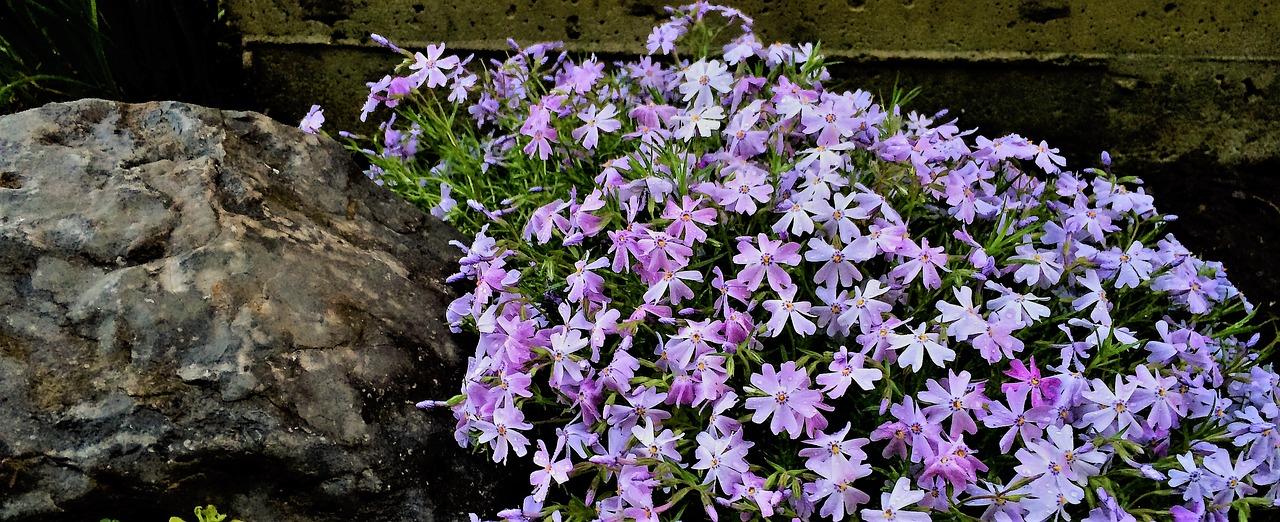
This plant makes a low mat with a flush of spring flowers. It suits sunny beds, rock gardens and the top of a low wall. Give it good drainage. In hot, humid summers, some light shade can help. Older mats can become thin in the middle, so flowers do not make it a care-free choice. NC State's creeping-phlox profile has plant details and photos.
Creeping thyme (Thymus serpyllum)
Creeping thyme suits sunny spots with gritty or sandy soil that drains well. It has small leaves and summer flowers. Check the named variety if you want it near a path: some tolerate light steps, but keep regular walking on the stones. Do not assume an ornamental thyme is the same plant sold for cooking. See NC State's species guide and its light-traffic example, 'Elfin'.
Creeping juniper (Juniperus horizontalis)
Choose this low evergreen shrub for sun and well-drained soil. It can suit a dry bank once settled, but its branches need room. A low plant can still grow very wide. Check the named variety's mature width before placing it by a sidewalk or steps. It is a bed plant, not a surface to walk on. NC State's creeping-juniper guide explains its spreading habit.
Mondo grass (Ophiopogon japonicus)
Mondo grass has narrow, grass-like leaves. It prefers shade and moist soil with good drainage. It can form a border or fill a small shaded bed. Check the label closely: dwarf forms differ from the full-size plant, and plants sold as black mondo belong to another species. Do not buy by a photo alone. See NC State's profiles for green mondo grass and black mondo grass.
Sweet woodruff (Galium odoratum)
Sweet woodruff has rings of green leaves and small white spring flowers. It prefers moist, well-drained soil in partial to full shade. It can spread strongly by underground stems and seed when conditions suit it. Dry summer weather may send it dormant, leaving less cover. Choose it only where you can watch its spread. NC State's sweet-woodruff guide describes these limits.
Spotted dead nettle (Lamium maculatum)
Its pale leaf markings can brighten a shaded bed. It prefers moist, well-drained soil, and hot, humid weather can leave bare patches. Regional advice differs: NC State describes manageable garden spread, while New Hampshire Extension warns of invasive tendencies. Ask for local advice before planting it near natural areas. See NC State's plant profile and New Hampshire's cautions.
Japanese pachysandra (Pachysandra terminalis)
This evergreen is often sold for shaded ground. It spreads through underground stems and can be hard to remove. Maryland Extension advises against planting it because it can spread into natural areas. Check local guidance before buying or sharing it. If you already have a patch, ask about removal and a suitable replacement rather than moving pieces elsewhere. NC State's profile also notes aggressive spread.
Bugleweed (Ajuga reptans)
Ajuga forms low mats with upright flower spikes. Stems root as they spread, which can make it hard to keep out of lawns and nearby beds. NC State notes invasive concerns in other regions. Maryland Extension recommends avoiding it. Fast cover is not worth a plant that becomes a local problem. Ask about a better fit for your area.
Prepare the ground before you plant
Remove existing weeds, especially those that grow back from roots. They are much harder to pull once they are mixed through new ground covers.
Get a soil test if you need advice on soil acidity or nutrients. Tell the lab what you plan to grow. Follow the results and plant needs rather than adding a complete fertilizer to every bed. Maryland Extension's soil-testing guide explains what a lab report can help you decide.
Fertilizer is not always needed for ground covers. For a label-based explanation, read our 10-10-10 fertilizer guide. Adding more feed is not a shortcut to a suitable planting site. New Hampshire Extension ties feeding to a soil test and notes that ground covers often have low nutrient needs.
Under trees, use small plants that fit between roots. Avoid cutting large roots to make room. Ask for help if planting would mean digging through a dense root system. Maryland Extension recommends small plants where existing roots make planting difficult.
Plant and space for the mature size
Choose planting weather for your climate. In New Hampshire, Extension recommends the mild weather of spring or fall; summer planting takes more watering. Ask local Extension about timing in your area, especially where summers are very hot or winters arrive early.
Use the spacing guidance for the exact species and named variety. Sketch the layout before digging. Plants set farther apart leave more soil to weed while they fill in. Closer spacing costs more and can crowd the planting. A small start does not mean every ground cover needs the same gap. See New Hampshire's planting guidance.
Care while the plants fill in
- Check the soil. Newly planted roots need attention even if the species can handle dry weather once settled. Water for the plant and soil conditions, rather than a fixed calendar.
- Cover bare gaps where needed. A suitable mulch can reduce weeds and protect exposed soil while roots grow. Keep it clear of the plant's crown, the base where stems meet roots. Maryland's perennial-care guide explains this precaution.
- Pull weeds early. Do not wait for new plants to crowd out an established weed patch.
- Watch the edges. Remove unwanted spread before it reaches the lawn, nearby plants or natural areas.
Let the plant's growth habit guide pruning. Maryland's perennial guide explains that grooming needs vary; avoid mowing or shearing every species the same way.
Questions before you buy
Which ground cover grows fastest?
There is no one winner for every yard. Growth depends on the plant and the site. A fast spreader may save weeding in one bed and create removal work in the next. Choose a plant you can manage, then plan care for the open gaps while it grows.
Can ground covers replace a lawn?
They can replace some areas that are hard to mow or poorly suited to grass. Keep a path or another durable surface where people walk often. Light-traffic plants are not the same as a play lawn. Maryland Extension explains these limits.
Will ground cover stop weeds?
A dense planting can reduce weed growth, but it will not remove the weeds already there. Clear the bed first and keep checking it as plants fill in. Expect care, not a weed-free promise.
Make a short list for your spot
Write down the light, soil moisture, winter zone, walking routes and nearby natural areas. Take those notes to your local Extension office or a nursery that knows your region.
Ask for a few suitable choices, including locally native plants. For example, Maryland's lawn-alternative guide suggests wild ginger, alumroot and green-and-gold for that region. Your area may need different plants.
Then check each choice's mature size and spread before buying a whole bed's worth. The right next step may be a smaller trial patch, a path through the bed, or a different plant for a wet spot.


