A white crust on houseplant soil or a pot rim is a reason to look more closely before adding water or fertilizer. Minerals in the water and leftover fertilizer can leave deposits as water evaporates. Surface growth can also look pale, and a dried fungal mat may become crusty.
Start with the pot, the mix and the plant. Those checks will help you decide whether to change care, flush a freely draining pot or replace badly affected mix.
Check the pot before treating the crust
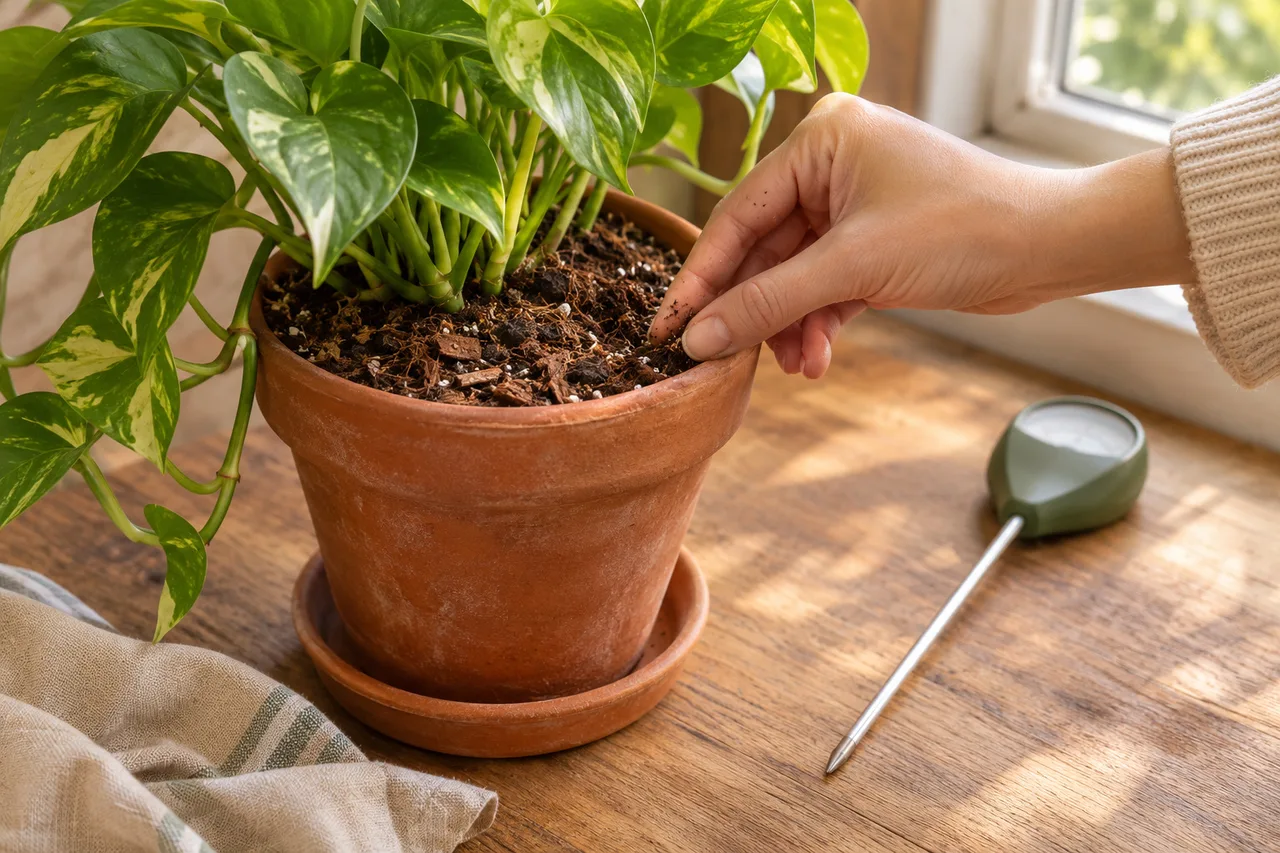
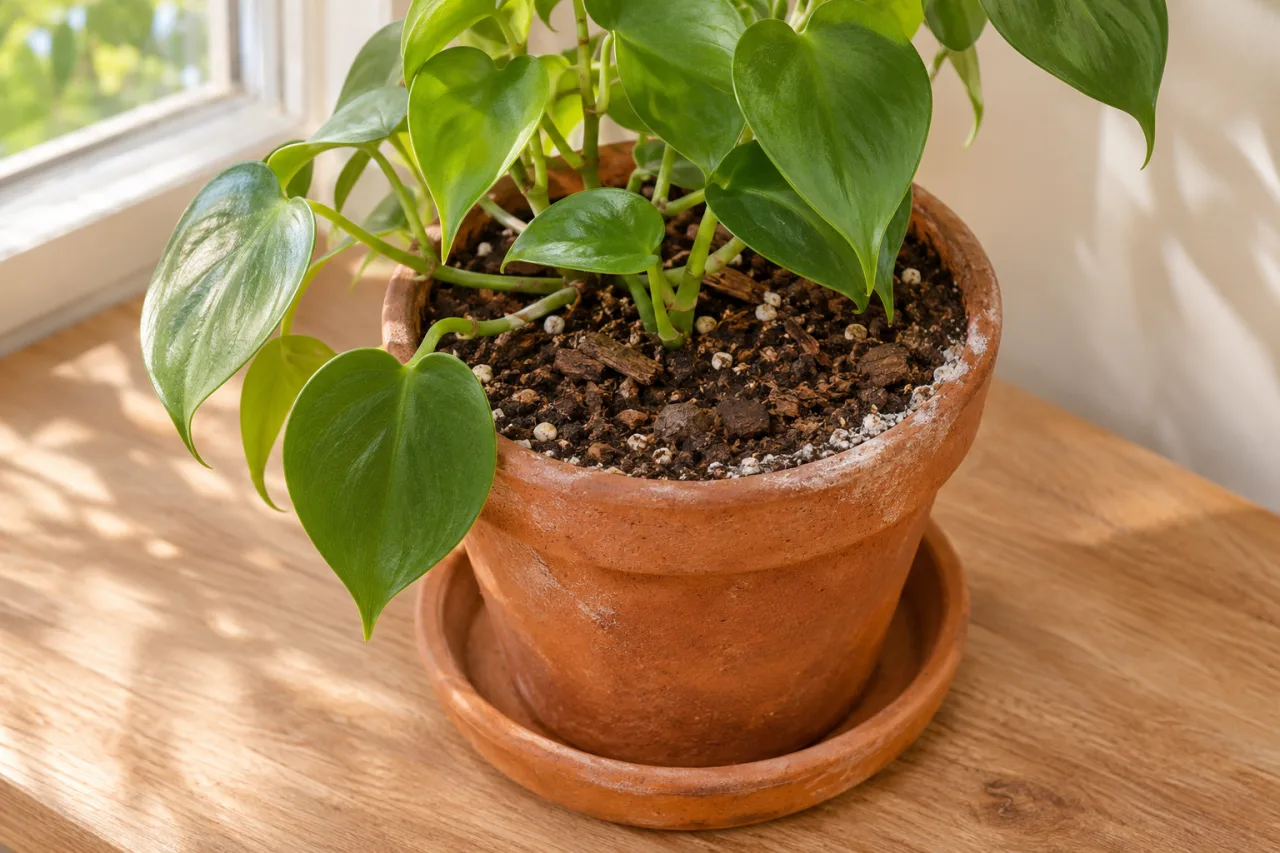
- Look at where the material appears. Is it on the pot rim, the outside of a clay pot, the soil surface, or the plant itself? Note whether it looks crystalline, fuzzy or like a continuous mat. These are clues, not a diagnosis.
- Check moisture below the surface and look for water in the saucer or decorative outer pot. Does the inner pot have drainage holes? A wilted plant in wet mix needs a drainage and root check before more water.
- Review recent care. Has the fertilizer dose or frequency changed? Does the potting mix already contain feed? Check the water source too, especially if deposits keep returning.
Take a photograph before disturbing the surface. It gives you something to compare later if you need help identifying the material.
Deposits and surface growth need different checks
A pale deposit on the soil or pot
Hard water and soluble fertilizers can leave mineral salts on the growing mix and container. A crust on the rim or porous clay pot makes those sources worth checking. It does not show how much salt is around the roots or prove that salts caused every brown leaf tip.
The University of Maryland Extension guide to mineral and fertilizer deposits explains that accumulated salts can interfere with water uptake and nutrient availability. Removing the visible layer alone will not correct the care pattern that keeps adding them.
Fuzz or a mat on the mix
Fungi can grow on moist potting media. Their surface growth is not usually harmful to the plant, but a thick mat can interfere with water entering the mix. It can also dry into a crust. That is why texture alone cannot reliably separate fungal growth from deposits.
For surface growth, review watering and air circulation around the pot. Maryland Extension recommends allowing the surface to dry between waterings and breaking up or removing a thick mat. Keep the needs of your particular plant in mind; do not dry the entire root ball just to remove a pale patch.
If the material is also on stems or leaves, or you cannot tell what it is, get it identified before choosing a treatment. Different problems can occur together.
If the mix is wet and the plant is wilting
Do not start with a flush. Roots left in wet soil can become damaged, and the plant may wilt even though water is available. More water can make that problem worse. Iowa State Extension describes these overlapping signs of overwatering and excess fertilizer.
- Empty standing water from the saucer or outer pot.
- Check that drainage holes are present and open. A decorative pot without holes is not a suitable place to flush the mix.
- If the plant keeps declining, inspect the roots and mix or ask a local Extension service for help. Fresh, well-drained potting mix may be needed if the existing mix has broken down or the roots are damaged.
Use the whole pot to judge watering, rather than the appearance of its surface. Our guide to checking when plants need water explains how the container and growing conditions affect that decision.
If mineral or fertilizer deposits look likely
Choose a response that fits the condition of the plant
For a small deposit on an otherwise healthy plant, begin by reviewing the water and feeding history. You can wipe the pot rim with a damp cloth and gently lift loose surface deposits without digging into roots. Keep watching the mix and plant; a clean rim does not tell you that the root zone has been corrected.
When flushing is a useful option
Flushing, also called leaching, means washing dissolved salts out through drainage holes. It is an option for suspected salt accumulation when the pot drains freely and there is no unresolved wet-root problem.
- Remove the inner pot from its decorative cover and place it where runoff can drain away.
- Apply clear water low in dissolved minerals slowly from the top. Let it pass through the mix and leave through the holes; do not let water collect around the pot. If water backs up or will not drain, stop and address drainage.
- Allow the pot to drain fully before returning it. Empty the runoff rather than letting the plant absorb it again.
Maryland Extension recommends using several volumes of clear water for leaching. That is a treatment for suitable draining pots, not a reason to water every plant heavily on a routine calendar. Do not repeat a flush day after day because the visible mark has not disappeared.
When replacing the mix makes more sense
Severe accumulation may call for repotting in fresh mix. Maryland Extension also recommends replacing high-salt media in smaller pots. If the mix is badly affected or no longer drains well, cleaning the surface will not solve the whole problem.
Use suitable potting mix and a draining container that fits the roots. A larger pot is not a salt treatment; do not surround a small root ball with a large volume of wet mix.
Reduce the chance of another buildup
- Follow the fertilizer instructions for the plant and its growing conditions. Account for feed already in the potting mix, and avoid adding more simply because a leaf looks pale.
- Match feeding to active growth. A slow-growing plant is not using nutrients at the same rate as one making new leaves.
- Review watering technique. Bottom watering does not carry salts out through the bottom of the pot in the way top watering with runoff can.
- If water quality seems relevant, check your supplier’s report before buying treatment equipment. A low-mineral water source can reduce further deposits, but changing water will not repair damaged leaves.
Our guide to distilled water for plants covers water-source choices in more detail. Not every plant or household needs the same change.
A few useful answers
Does a white crust mean the plant needs more water?
No. Check moisture around the roots and whether the pot can drain. A surface mark cannot tell you whether the plant is thirsty, too wet or dealing with another problem.
Should I add vinegar or a mold remedy?
Do not add a kitchen treatment to an unidentified problem. The steps above use drainage checks, suitable water and fresh mix where needed. Surface growth does not by itself establish a need for a fungicide.
When should I ask for help?
Ask if the plant keeps declining, the material spreads onto living parts, or you still cannot identify it. Share photographs of the surface and whole plant, along with the pot’s drainage, recent watering and fertilizer use. That history is more useful than naming a problem from its color alone.