Keep houseplant leaves clear of cold window glass, and check what happens around the pot after dark. A bright windowsill may still suit your plant. If it gets too cold, the next step is finding a warmer place with enough light.
You may only need to change where the leaves sit or move a small pot before closing the curtains. Start with the plant you have and the window it uses.
Check the window before changing the room
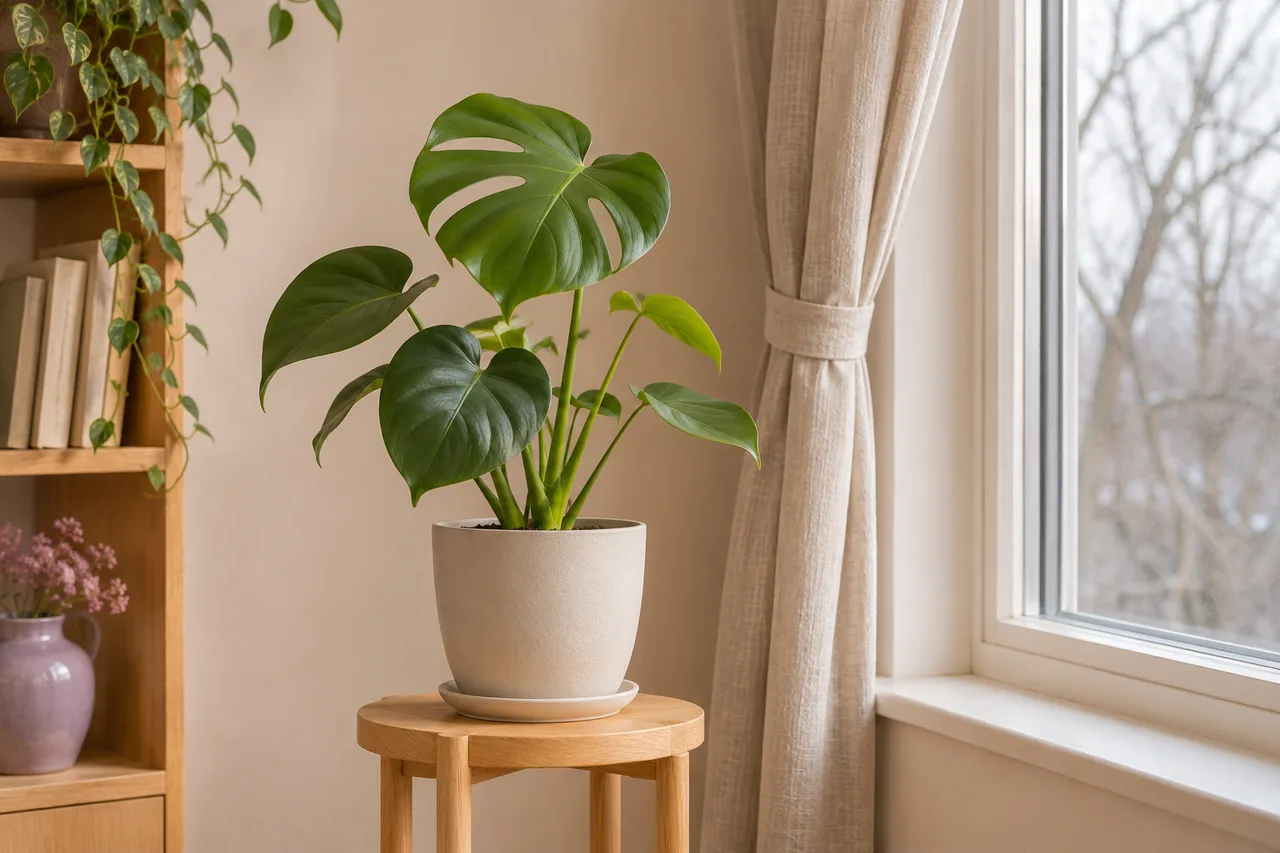
Look at the whole plant. Are any leaves pressed against the pane? Does cold air come through the frame or an outside door nearby? Will closing the curtains leave the pot between the fabric and the glass?
NDSU Extension advises keeping leaves off cold windows and protecting houseplants from cold drafts. Move touching foliage clear of the pane. If the spot is clearly too cold for your plant, move it to a suitable warmer place while you work out a lasting arrangement.
Check the new spot for heat, too. A radiator or heating vent can put the plant in a stream of drying warmth. A nearby shelf or stand is useful only if its conditions suit the plant.
Find the overnight low near the plant
Find your plant's name, then check its label, a reliable care guide or RHS Find a Plant for its specific temperature and light needs. Compare those needs with conditions at your window. A temperature that suits one plant may be unsuitable for another.
Illinois Extension recommends a digital thermometer near the plant to track temperature changes. Check after dark and early in the morning, especially during colder weather. If your thermometer remembers the lowest reading, that can help you see what happened overnight.
Write down where you checked and whether the curtains and heating were in their usual positions. A reading from the room's thermostat does not describe the plant's exact spot.
There is no one distance from the glass that settles this decision. Keep leaves clear, then compare the conditions around the plant with its own needs.
Choose whether to keep or move the pot
Use these checks to choose your next step:
- Leaves touch cold glass: reposition the plant so the foliage stays clear.
- The pot sits behind closed curtains: move it to the room side before closing them on cold nights.
- The spot is drafty or colder than the plant's guidance allows: choose a warmer place with suitable light.
- The spot meets the plant's needs: it may stay. Check again when the weather or heating routine changes.
- Moving it each evening is awkward: look for a suitable permanent position rather than relying on a routine you cannot keep.
The RHS explains that curtains can trap cold air between the fabric and the window. A pot can be clear of the pane and still sit in that pocket.
Imagined example: a small pot behind a curtain
A small plant gets useful daylight on a sill. At night, a thick curtain closes in front of it. You choose a nearby table on the room side of the curtain, check that spot's temperature, and return the pot to suitable daylight in the morning. If the table also provides enough daytime light, it could become the plant's regular home.
By day: give the plant the light its care guide calls for, with leaves clear of the pane. After dark: keep it out of a cold curtain pocket and within its temperature needs.
Keep useful light after the move
Check daylight from the plant's new position. A room can look bright from the doorway while a shelf receives little window light.
Iowa State Extension explains that light drops quickly with distance from a window. Spots just beside a window can be darker than they appear. Curtains, nearby buildings and trees also affect what reaches the leaves.
Try another suitable bright position before settling on a dim corner. Open coverings during daylight where appropriate, and check any direct sun against the plant's needs. Winter light can change as the sun's angle changes and outdoor trees lose their leaves.
Imagined example: a warmer side table
You move a plant from a chilly sill to a table beside a bookcase. The table feels warmer, but the bookcase blocks much of the window. Instead of accepting that spot, you check a second table facing the window. You compare both temperature and daylight there before choosing it.
If you cannot find enough natural light in a suitable warm spot, supplemental lighting is an option. Our grow-light bulb and lamp guide helps you check whether a compatible setup can send useful light to the leaves.
Check watering in the new spot
Use separate checks for temperature and moisture. Feeling the potting mix tells you about watering; a thermometer tells you about the air around the plant.
Changing the location can change how quickly the mix dries. Iowa State lists light, temperature, humidity, pot and plant differences among the factors that affect watering. Follow the moisture cue for your plant rather than carrying over its old watering dates.
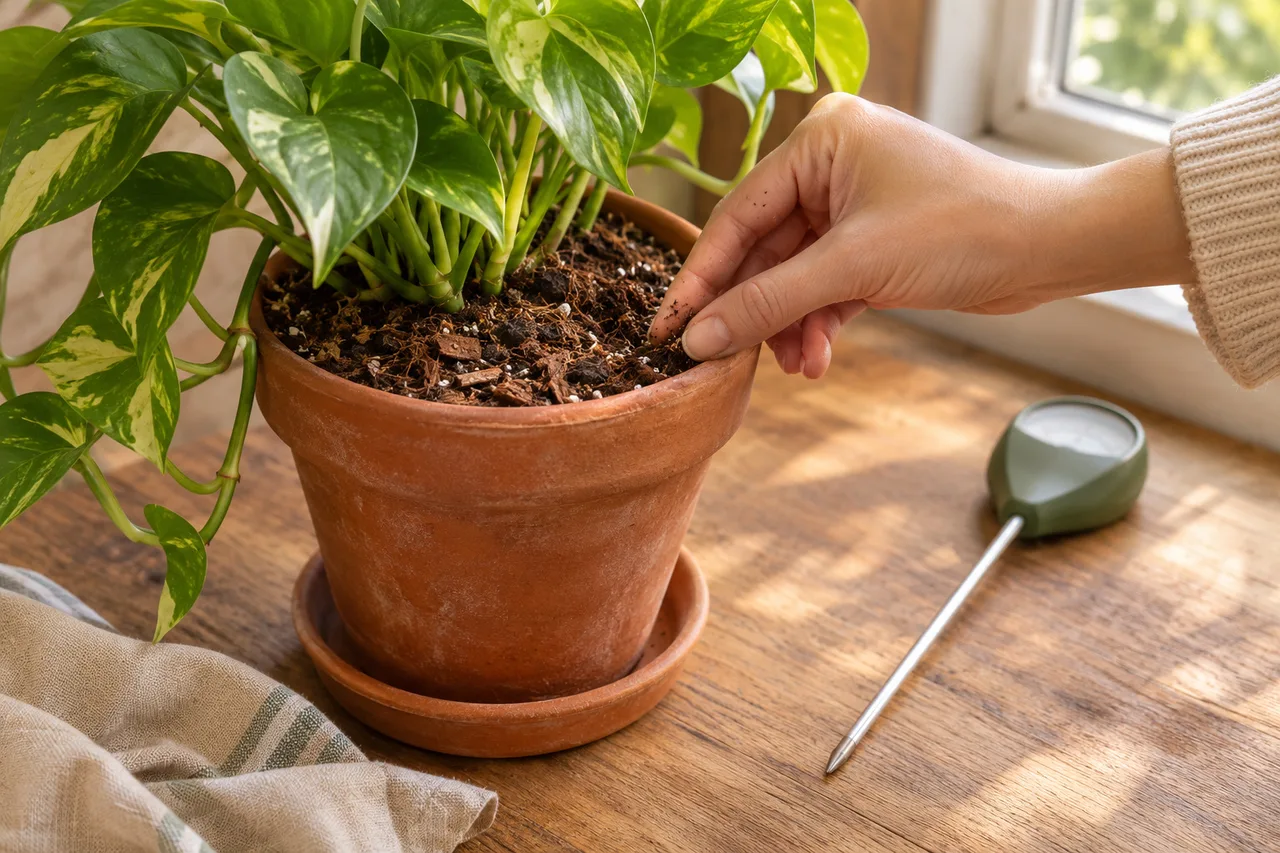
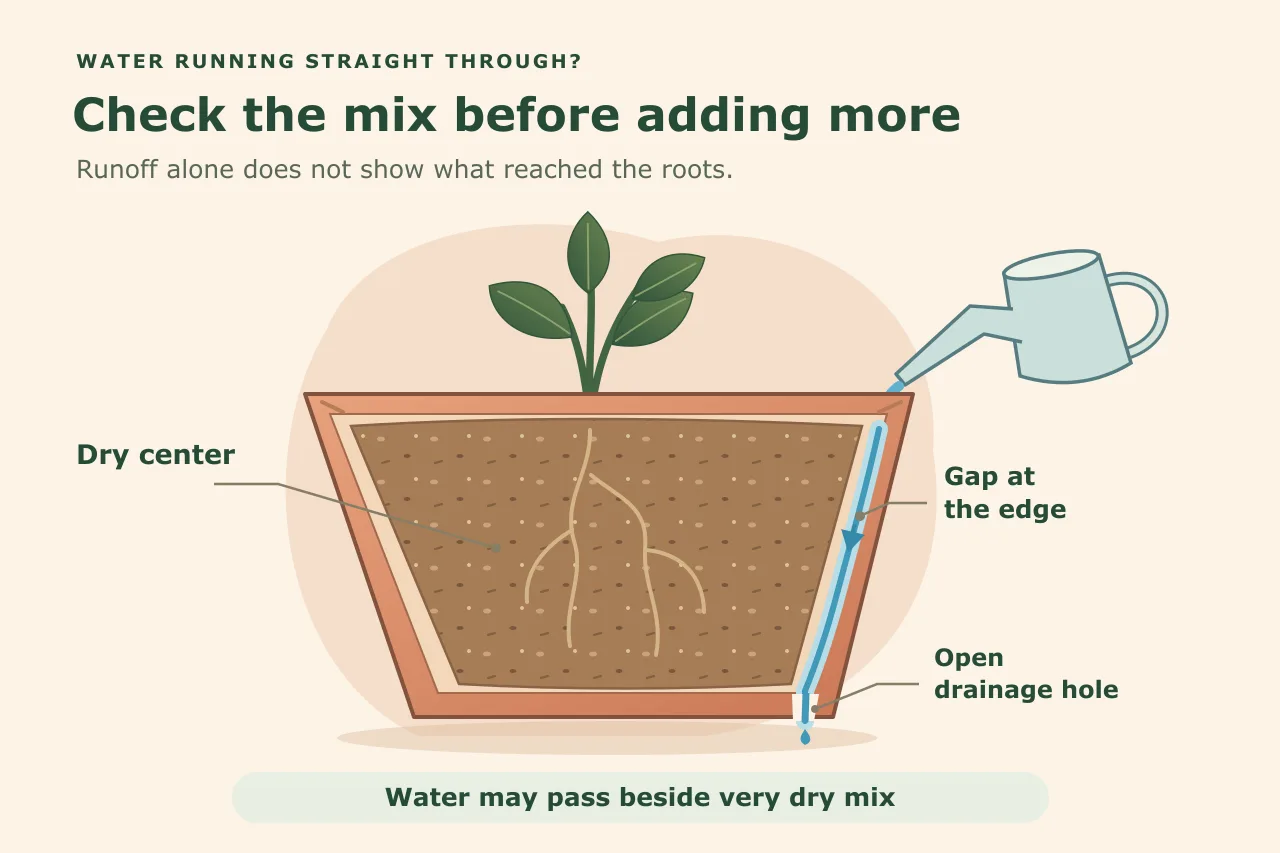
If you use a probe, our houseplant moisture-meter guide explains how to cross-check a surprising reading. If water rushes out but the mix still seems dry, use the potting-mix watering checks before adding more.
Imagined example: a large plant near a heat vent
A large plant is too heavy to shift each evening. You find a permanent bright position away from the cold window, then notice a heating vent blowing toward it. You choose another position and check its conditions. After the move, you keep checking the mix instead of assuming it needs the same amount of water on the same day.
If leaves already look damaged
Move the plant out of unsuitable conditions and check the rest of its care. The RHS lists blackened leaves, drooping and collapse among possible cold-damage symptoms. Other problems can also affect leaves, so a brown patch alone cannot confirm the cause.
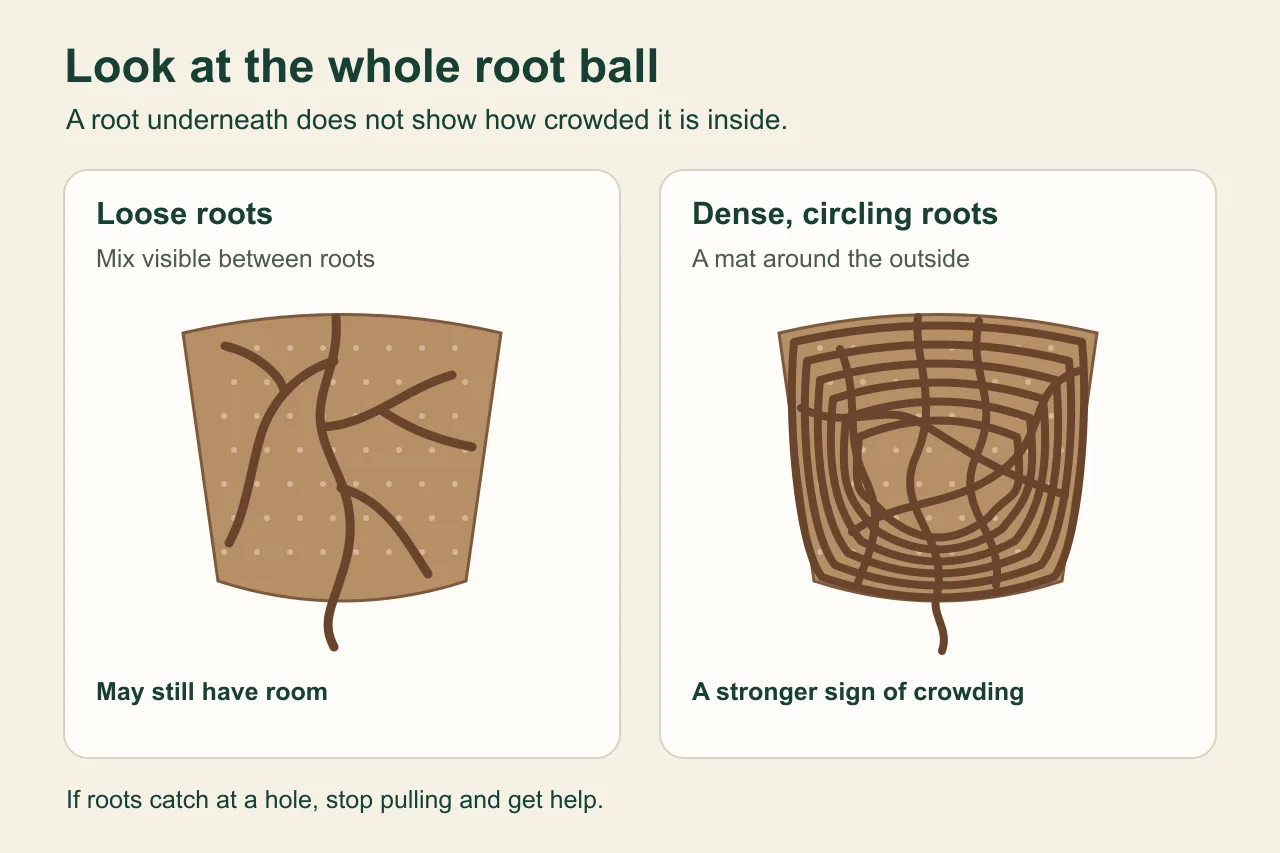
Note recent cold exposure, which leaves changed, and what you found in the potting mix. Check for pests and compare the new location with the plant's care guide. If the cause remains unclear or the plant keeps declining, share those details and photos with a local extension office or a knowledgeable plant-care adviser.
Before closing the curtains tonight, make three checks: leaves clear of glass, plant on the suitable side of the curtain, and a plan for tomorrow's light.