Mushrooms in houseplant soil are a reason to check the pot, not a reason to throw away the plant. Start with two questions: could a child or pet eat them, and is the plant growing in conditions that suit it?
Keep unknown mushrooms out of reach and do not eat them. Then look at the plant, the mix and the drainage before buying a treatment or changing your watering routine.
What mushrooms in a plant pot can mean
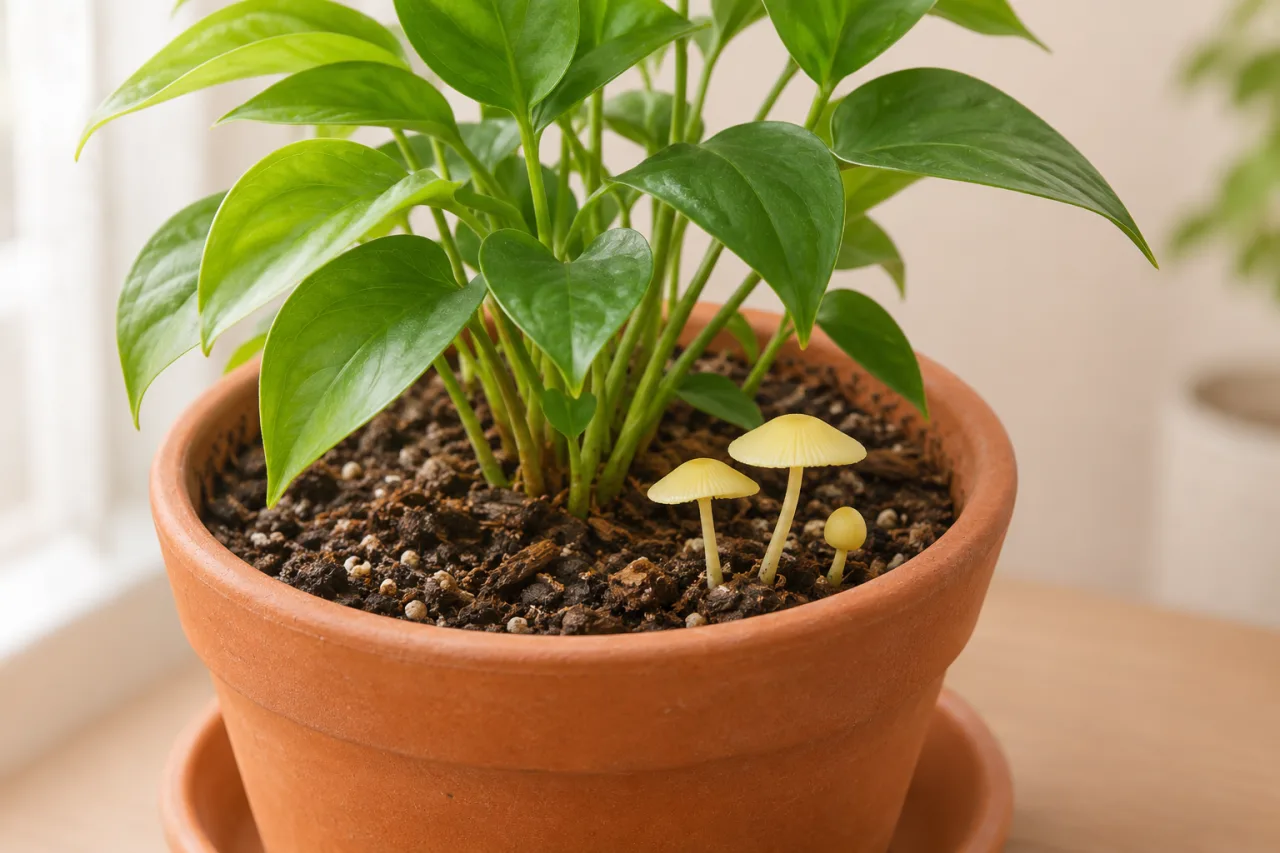
The mushroom you see is a fruiting body. Much of the fungus can remain out of sight as fine threads in the mix. It may have arrived with potting materials or from spores carried through the air.
One common yellow example is the flowerpot parasol, Leucocoprinus birnbaumii. Iowa State Extension explains that this fungus feeds on dead organic matter rather than the living houseplant. It can appear even when the plant itself looks healthy.
That is not an identification of the mushroom in your pot. Several kinds of fungi can grow in containers, and color alone cannot tell you what is safe to eat. Treat any unknown mushroom as something to keep out of mouths.
Choose your next step
The plant looks healthy and the pot drains
You do not need to repot just because one mushroom appears. Remove the visible fruiting bodies if you prefer, and keep checking the plant as usual. Follow its own moisture needs instead of making the whole pot bone-dry to stop mushrooms.
The mix stays wet and the plant is struggling
Check for water trapped in a saucer or decorative cover. Make sure the inner pot has open drainage holes. Look at light, pot size and how the mix dries between waterings.
If leaves are declining and the root area stays wet, inspect the roots when you can do so without pulling the plant apart. Soft, rotting roots need attention, but a mushroom alone does not prove root rot. Do not add more water simply because a leaf droops.
A child or pet could reach the pot
Remove the mushrooms and put them in a closed rubbish bin. Move the pot somewhere genuinely out of reach, and check for new mushrooms. Removing today's caps does not stop the fungus from producing more.
If someone may have eaten an unknown mushroom, contact a poison service promptly rather than waiting for symptoms. In the United States, call Poison Control at 1-800-222-1222. For a pet, contact a veterinarian. Outside the United States, use your local poison service.
How to remove the visible mushrooms
- Take a photo before removal if you want help identifying them. Include the whole mushroom and the potting mix around it.
- Pick out the visible caps and stalks, using a tissue or gloves if you prefer. Dispose of them where children and pets cannot retrieve them.
- Check the pot again as you care for the plant. New fruiting bodies may appear because the fungus remains in the mix.
You are removing a visible part of the fungus, not sterilizing the pot. There is no need to dig through healthy roots trying to find every thread.
Check watering without harming the plant
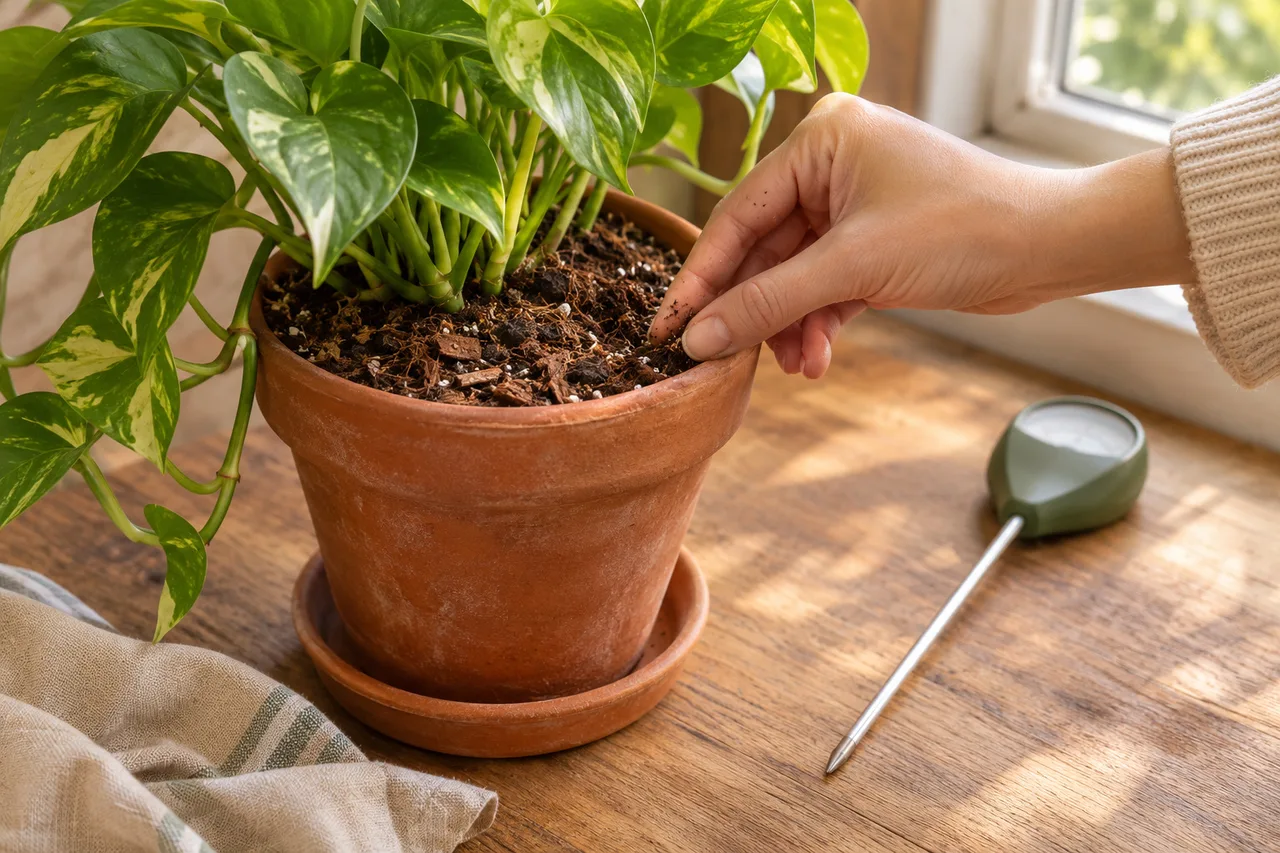
Mushrooms are not a moisture meter. Check below the surface where you can, notice how heavy the pot feels, and consider how much light the plant receives. Different plants need different drying periods.
When you water, let excess water escape and empty the outer container. Do not leave a normal draining nursery pot standing in runoff. Our houseplant moisture-meter guide explains how to cross-check a reading instead of letting one number decide.
Small flies are a separate clue. If you also see them, use our fungus-gnat source checklist; a mushroom does not identify the insect or tell you where it is breeding.
Do you need fresh potting mix?
Fresh mix can make sense when the current material stays too wet for the plant, has broken down, or needs replacing during a planned repot. Choose a mix suited to that plant and a container that fits its roots. A much bigger pot is not a mushroom remedy.
Do not expect repotting to guarantee that mushrooms will never return. UMass Extension notes that established yellow houseplant fungi can be difficult to eliminate, even when the medium is replaced.
If crowding is the real concern, our guide to roots at drainage holes helps you decide whether repotting is needed. Keep the decision about the plant's root space separate from the appearance of one mushroom.
Skip the automatic chemical treatment
A healthy plant with a mushroom does not automatically need a fungicide. Iowa State reports that fungicide treatments are generally ineffective against these yellow houseplant mushrooms. Avoid turning a cosmetic concern into repeated soil drenches.
For an unknown fungus or a plant that continues to decline, ask your local Extension service or a plant diagnostic clinic for help. Share photos and details about the plant, its mix and recent care. Do not use this guide's illustration as a species-identification reference.