A snake plant does best when you give it light and resist watering it too often. Start with bright, indirect light, a pot with drainage holes and a potting mix that dries between waterings. A dim corner may keep it alive, but it is not the best place for strong new growth.
This guide focuses on Dracaena trifasciata, still often sold as Sansevieria trifasciata. Before changing its care, check the mix and the leaf bases together. A yellow or bent leaf alone cannot tell you whether the plant needs water.
Your first three checks
- Light: choose a bright spot near a window, protected from harsh afternoon sun.
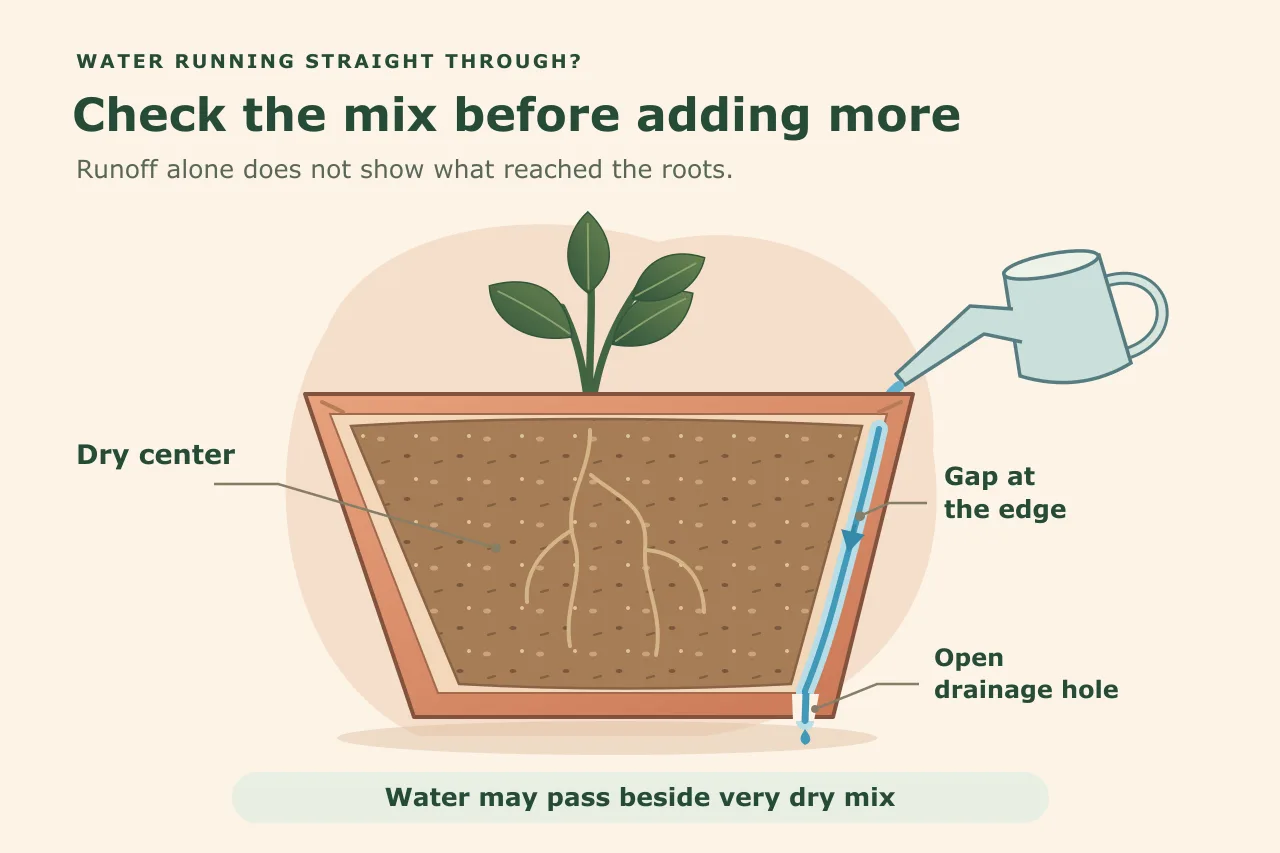
- Drainage: make sure water can leave the inner pot. Empty any water trapped inside a decorative outer pot.
- Moisture: check before watering rather than putting the plant on a fixed weekly schedule.
You do not need a humidifier for this plant. Ordinary household humidity is enough, according to the New York Botanical Garden care guide.
How to water a snake plant
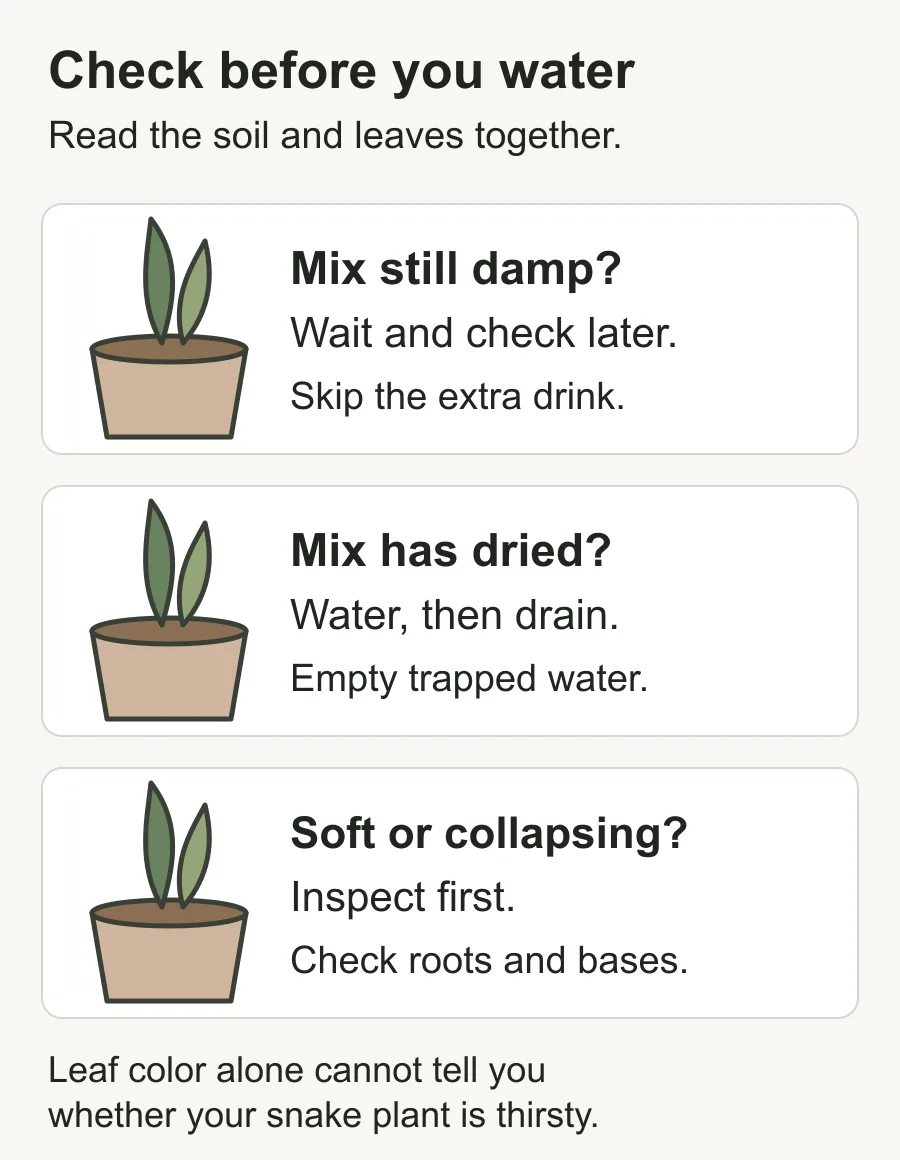
Check the potting mix and leaf bases together before deciding whether to water.
Let the potting mix dry between waterings. Check below the surface, not only the dry-looking crust on top. If it still feels damp, leave the watering can alone and check again later. In a deep pot, a surface check may miss moisture lower down.
When the mix has dried, water the soil evenly and let excess water drain away. Keep water out of the center of the leaf cluster, and empty the saucer. Less light and slower winter growth usually mean a longer wait between drinks, not the same schedule with a different date on the calendar.
Keep a simple note of when you checked and what you found. It is a check schedule, not a promise to water. Our plant-sitter watering plan can help someone else follow the same approach.
Light, warmth and placement
Low-light tolerance does not mean no-light growth. If your plant sits far from a window and barely grows, move it toward brighter light gradually. Do not shift a plant straight from shade into strong sun.
A warm room without cold drafts is a sensible starting point. Keep leaves away from cold window glass. If you move plants outside for summer, protect them from hot afternoon sun and bring them in before cold weather. UF/IFAS also advises keeping snake plants in pots because they can be invasive in suitable climates.
Soil, pots and feeding
Use a free-draining cactus or succulent mix and a pot with an open drainage hole. A heavier container can keep tall leaves from tipping the plant over. A decorative pot is fine as an outer cover, provided you can remove the inner pot to water and drain it.
Feed while the plant is actively growing, following the fertilizer label. More fertilizer will not fix wet roots or an overly dark spot. The RHS growing guide gives seasonal feeding and repotting advice.
When to repot, divide or prune
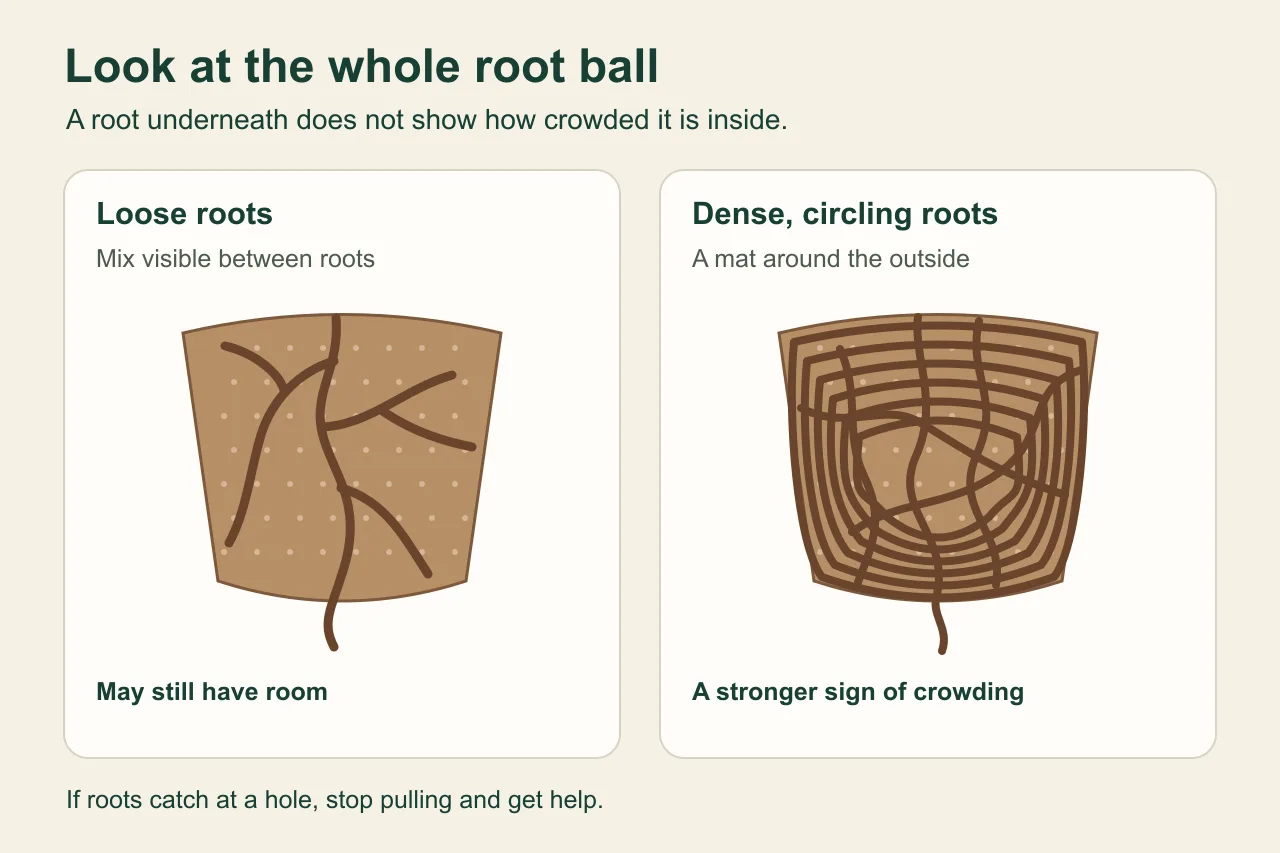
Snake plants can stay in one pot for several years. Repot when the plant has outgrown the space, rather than because a calendar says a year has passed. Choose a slightly larger container with drainage; avoid surrounding a small root ball with a large volume of wet mix.
Division is a practical way to make another plant. During repotting, look for an established offset several inches tall with its own roots. Separate it with a clean cutting tool and place it in a suitably small pot of quick-draining mix. Avoid pulling apart an unrooted shoot as though it were an established plant.
Wear gloves when cutting: the sap can irritate skin. Keep cut pieces away from children and pets. Remove a dead or badly damaged leaf near the soil with a clean tool. Cutting the tip will not restore the leaf's original pointed shape. New growth is a better sign of recovery than expecting old damage to disappear.
Yellow, wrinkled or falling leaves: what to check
Start with the evidence below. These clues narrow the possibilities; they do not prove a diagnosis.
| What you notice | Check next | A useful first action |
|---|---|---|
| Yellow leaves and wet mix | Standing water, blocked drainage and soft leaf bases | Stop adding water. Empty trapped water and inspect for rot. |
| Wrinkled leaves and dry mix | Whether the mix is dry below the surface | If it has dried, water evenly and drain. Watch for further change. |
| Soft or collapsing leaves | Wet roots, damaged bases or recent cold exposure | Inspect rather than watering automatically. Severely rotted tissue will not recover. |
| Slow growth in a dim corner | Distance from useful daylight and time of year | Increase light gradually; do not try to force growth with extra feed. |
Check for pests while cleaning dust from the leaves, including around the bases. Isolate a suspect plant from others while you identify the problem. Look closely at any webbing, white clumps or moving specks before choosing a treatment.
Choose the shape that fits your space
Look at the cultivar label, not just the common name. NC State describes ‘Hahnii’ as a compact rosette, ‘Laurentii’ as an upright form with yellow edges, and ‘Moonshine’ as silvery gray-green. A small rosette and a tall upright plant need different shelf space even though both are called snake plants.
Is a snake plant safe around pets?
No. The ASPCA lists it as toxic to cats and dogs. Chewing or swallowing it can cause nausea, vomiting or diarrhea. Keep it out of reach. If you suspect ingestion, contact your veterinarian or animal poison control promptly rather than waiting for symptoms.
Questions before you buy or change its care
What should I look for at the nursery?
Check for firm leaves, sound bases and a pot that is not sitting in water. A plant's natural markings vary by cultivar, so do not treat every yellow edge as damage. Use our nursery shopping checklist before choosing one.
Will it purify my room or help me sleep?
Buy it because you enjoy growing it, not as an air cleaner or sleep treatment. The EPA says a reasonable number of houseplants has not been shown to remove significant pollutants in homes and offices.
How quickly will it grow?
There is no reliable number of new leaves to promise. Light, warmth, season and cultivar all matter. Compare your plant with its own earlier photos rather than a much larger nursery specimen.
What to do today
Check the light, check the mix and empty any trapped water. Change the condition that actually needs attention, then watch the plant rather than changing everything at once. If pouring around the leaves is awkward, our watering-can fit guide can help you decide whether your current jug already does the job.
Additional references: NC State Extension species profile and UF/IFAS snake-plant fact sheet.